At this workshop, writing your own obit means analyzing your past — or future

This article originally appeared in the Washington Post Magazine

(Janne Iivonen for The Washington Post)

(Janne Iivonen for The Washington Post)

On a Monday evening in September, seven people gather at the Rhizome, a house that has been converted into a community arts space in the District's Takoma neighborhood. They range in age from late 20s to early 70s, and come from an array of professions — nonprofits, woodworking, think tanks. They're all here tonight for an unusual writing exercise: one where people — typically of the healthy, non-dying variety — hammer out the text for their own obituaries.

The group’s facilitator is Sarah Farr, 43, a trained death doula who provides companionship and guidance to the dying. In the spring of 2017, she formed Death Positive DC and began hosting regular events: “death cafes,” where people sit around and chat about death, often over cake; and obituary writing workshops like this one. (Death cafes are free or donation based; obituary writing workshops cost $10.) She also operates a Facebook groupwith about 600 members.

Farr opens the workshop by tracing the history of obituaries in American journalism and outlining their shifting cultural significance through major events such as the AIDS crisis and 9/11. She encourages the group to think about how the advent of social media and memorial websites like Legacy.com have changed the way deaths are reported. (She notes that two-thirds of people who die in America get a Legacy.com page.) She shares examples of funny, viral obituaries — one simply reads, “Doug died” — and dives into the ethics of adult children publishing unflattering obituaries of their parents.

She also brings up the role that race and gender have historically played in the obituary sections of prominent newspapers. She mentions the New York Times project Overlooked, which started in 2018 and features obituaries of women and people of color whom the newspaper neglected to write about when they died. (Entries include journalist and anti-lynching advocate Ida B. Wells, transgender activist Marsha P. Johnson and poet Sylvia Plath.)

Then, educated about obituaries and ready to craft their own, the participants are set loose. They wander to different corners of the house or outside to the porch — and they begin to write.

Obituary writing workshops are part of an expanding suite of events and activities that fall under the umbrella of the “death positive movement.” Based on the belief that cultural avoidance of discussing death is harmful, the movement encourages people to speak more openly about dying. It had been rumbling for several years before it gained a name and solidified into an official movement. In 2011, a man named Jon Underwood — who would later die at age 44 — held his first death cafe in his basement in London. He envisioned the meetings as a refuge from what he saw as a pathologically death-averse culture.

That same year, a mortician named Caitlin Doughty started a popular YouTube channel, “Ask a Mortician,” which she used to spread information about death acceptance and to combat death anxiety. It was Doughty who, in a tweet, coined the term “death positive” as a play on the phrase “sex positive.”

After Underwood and his mother published an online guide for holding death cafes, the idea quickly spread and was enveloped into the growing death positive movement. Since then, according to Death Cafe’s official website, there have been more than 9,700 death cafes held in 66 countries. Anyone can host their own death cafe, as long as they abide by the official guidelines set out by Underwood.

(Janne Iivonen for The Washington Post)

The movement is growing here in Washington as well. Farr has seen attendance at her death cafes rise markedly over the years. Her first death cafe, held in November 2016, saw about 15 attendees. Recently, her meetings have topped out at 50, even in the rain and during the cold winter months. She remembers that just two years ago, there were very few death cafes in the region. Now, the Death Cafe website lists up to four or five per month in the D.C. area.

After about 20 minutes, Farr calls the group back together. Attendees take their seats and Nadia Raikin, 60, volunteers to share what she’s written. As she reads, her dry, cool humor is palpable: “Well. I am dead now. But at least I lived for a while, which is better than nothing.” She pauses to smile as a chuckle goes through the room. “But I’m happy I got to experience life and that my mom, upon blessings of my grandma, decided to keep me. I was born out of a force of nature. I guess I died when nature or God called me back.”

An older man named Chris is next. “Chris lost his life in a car accident on November 1st, 2020, nine days before his birthday. He was 75,” he says as the others listen attentively. Tall with gray hair, he speaks in a gentle, straightforward voice, sketching out the story of life, marriage and work.

“He was a humorous, easygoing man who drank a little too much but never caused any trouble when the drink got the better of him. He always felt intense empathy with the underdogs of the world, which he felt a member of. But he was happy and comfortable with this identity.” He stops reading abruptly and looks up from the page. “Anyway, blah, blah, blah. What did you all think?”

“I loved it,” Farr says. “I think it could be a great jumping-off place for a memoir.”

After a few more people share their obits, the group breaks for another round of writing. For the middle-aged and younger participants, writing their own obituaries can be a forward-looking exercise. Jill Eckart, 40, says, “I took it as an opportunity to create what might be possible in the next half of my life. I have about hopefully 45 to 50 more years left. With the end in mind, what do I want that space to look like?”

By now, the sun has set behind the apartment complex across the street. Seated on the old wooden porch, Carter Rawson, 50, speaks of how the impulse to document his life seems to come naturally to him. “I’m biased because I’m a historian,” Rawson says. “I like to read about a life well-lived.” He continues: “I’m not the most interesting person in my family, and I’m never going to be. But if you go to a yard sale and see disembodied old pictures, you wonder what their lives were about. I just felt I would want to do someone the favor of actually giving a narrative — being that one photo that had a story taped to the back of it.”
The Surprisingly Subversive History Of Beauty Pageants

This article originally appeared in the February/March 2018 print edition of BUST Magazine

AP_739263488687_ebeff.jpg

Since the 1960s, feminists have been protesting the sexism of beauty pageants. But others have chosen to subvert these competitions from the inside, entering as a form of activism. 

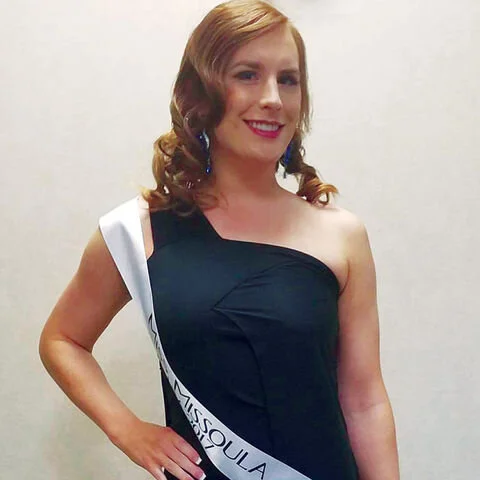
On a Saturday morning this past September, Anita Green walked across a stage in a black cocktail dress and pink lipstick to become the first trans woman to compete in the Miss Montana USA pageant — ever.

Already well known in Montana as the state’s first trans delegate, Green entered the pageant, in part, as a political statement. “I don’t want trans people to be afraid to be who they are,” she says of her decision to compete. “Trump has immensely harmed the trans community and instilled fear in us. I want to inspire confidence among trans women to know that they are beautiful.”

By competing, Green sought to boldly claim space for trans women like herself, and to communicate to the world that trans women are here, they are beautiful, and on pageant night, they will be striding proudly into your living room.

It’s easy to see Green’s participation in Miss Montana USA as an isolated courageous act. Perhaps that’s because most feminists are used to thinking of pageants as something to protest against. But the truth is, by competing—even though she knew the deck was stacked against her—Green was taking part in a rich tradition of women using pageants as platforms for political change. To understand her story in context, we have to go back to the middle of the last century—to the height of the American Civil Rights Movement.

Anita Green, the first trans woman to compete in the Miss Montana USA Pageant, 2017

Anita Green, the first trans woman to compete in the Miss Montana USA Pageant, 2017

THE FIGHT TO DESEGREGATE BEAUTY PAGEANTS

By the late 1960s, the Civil Rights Movement had made its mark on American society. The decade had been rocked by bus boycotts, freedom rides, lunch-counter sit-ins, the Civil Rights Act, the Voting Rights Act, and Brown v. Board of Education—all of which seemed to be reconfiguring the fabric of the country.

Against this political backdrop, the Atlantic City chapter of the National Association for the Advancement of Colored People (NAACP) began to push for integration of Miss America. The pageant—a sunny, touristy affair held near the boardwalk each year in late summer—was open exclusively to white competitors. In a now infamous bylaw, racial exclusivity was codified: “Contestants must be in good health and of the white race.”

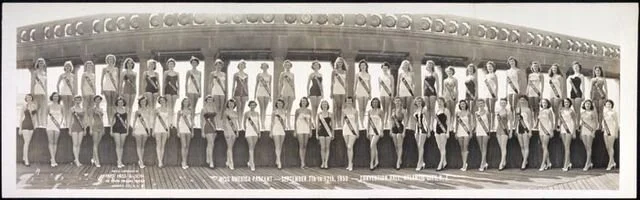
The Miss America contestants of 1953

The Miss America contestants of 1953

To many members of the black community in Atlantic City, the arrival of the racially exclusive event into their town each year was yet another reminder of the segregation they faced on a daily basis.

Several NAACP leaders were outspoken against the pageant. Philadelphia-based NAACP official Philip Savage suggested a boycott of all sponsors of the Miss America Pageant, saying, “It is time for Miss America to be Miss America and not Miss White America.” Edgar Harris, the president of the Atlantic City chapter of the NAACP, was quoted as saying, “We should not be calling it the Miss America Pageant because it won’t be that until we find some negroes representing some of these United States.”

In 1968, the situation reached a tipping point. Miss America president Adrian Phillips, under pressure from both the NAACP and a cultural shift toward integration, agreed to remove racial exclusivity from the pageant rules; for the first time in the contest’s 47-year history, black women would be allowed to participate.

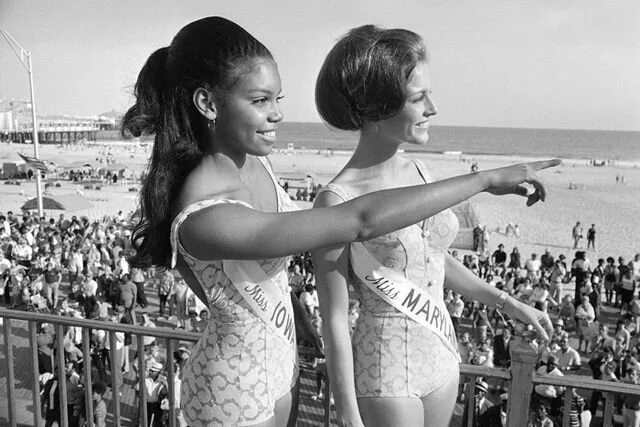
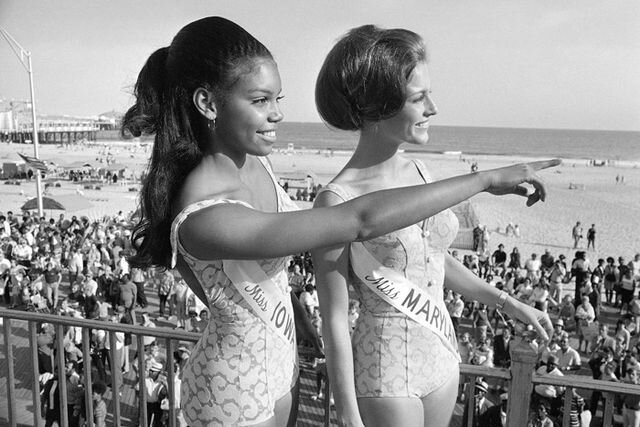
Miss Iowa, Cheryl Adrienne Brown, the first African American to reach the finals in the Miss America Pageant, on the boardwalk in Atlantic City, NJ, in 1970 with Miss Maryland, Sharon Ann Cannon

Miss Iowa, Cheryl Adrienne Brown, the first African American to reach the finals in the Miss America Pageant, on the boardwalk in Atlantic City, NJ, in 1970 with Miss Maryland, Sharon Ann Cannon

A PLATFORM FOR POSITIVE IMAGING

Perhaps from our vantage point in history, it is not immediately clear why beauty pageant integration was a politically meaningful strategy. But it is important not to underestimate the power of images in the cultural imagination—and during this era, it was difficult to imagine a more potent venue for positive imaging than Miss America. Americans had been glued to their television sets every year on pageant night since the contest was first televised in 1954 after 33 years as a legendary live attraction in Atlantic City, NJ.

From the perspective of civil rights activists who sought pageant integration, beauty contests represented a unique opportunity to broadcast positive images of black women into the collective consciousness. For the same reason, efforts had also been made to increase black representation in the modeling industry. In 1947, The Amsterdam News in New York City published a letter to the editor that read, “This is not just a question of...getting modeling jobs open to negro women in agencies that discriminate at present. This can be the beginning of getting pictures of negroes in our magazines…other than that of maids, butlers, or mammies.”

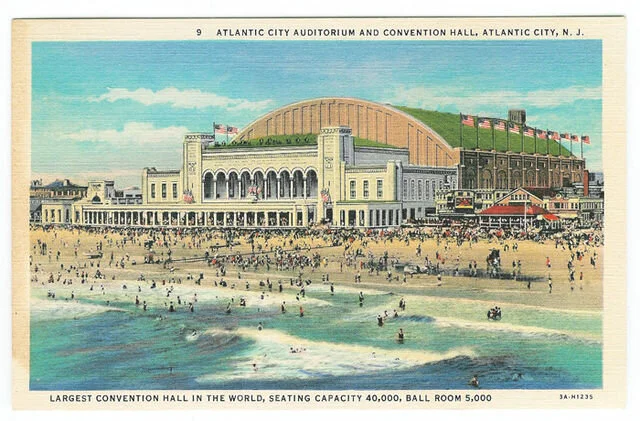
A vintage Atlantic City postcard

A vintage Atlantic City postcard

Indeed, Miss America seemed to be a powerful platform from which to broadcast a vision of black womanhood that diverged sharply from “maids, butlers, or mammies.” In fact, five times throughout the 1960s, the Miss America Pageant was the highest-rated television show of the year. It was the most glamorous program on TV, reaching almost mythological heights in the cultural imagination. Therefore, in looking to the Miss America Pageant, the NAACP Atlantic City chapter recognized a prime opportunity to help shape the narratives of both blackness and all-American beauty.

Two years after black women were deemed eligible to compete, Cheryl Brown became the first black woman to win a state competition and went on to compete in Miss America as Miss Iowa in 1970. Many civil rights activists rejoiced. After years of encouraging black women to enter traditionally all-white beauty contests, at last, that racial boundary had been crossed.

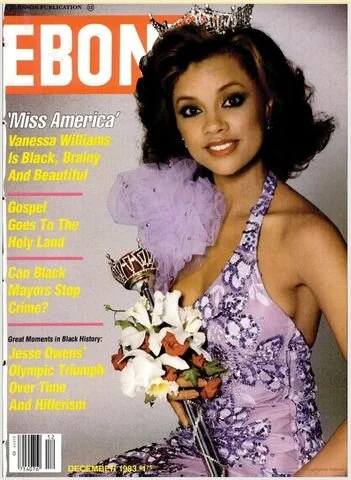
The first black Miss America, Vanessa Williams, in 1983

The first black Miss America, Vanessa Williams, in 1983

BEAT THEM OR JOIN THEM?

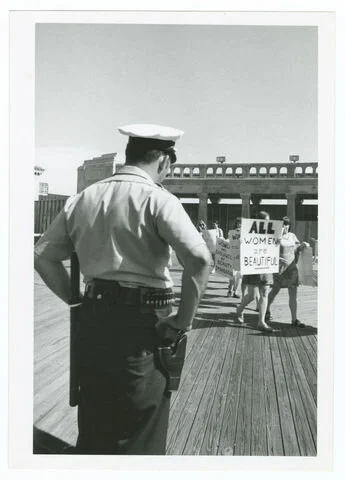
Certainly not everyone saw Miss America as a worthwhile platform. In 1968, the same year that black women won the right to be included in the pageant, a group of predominantly white feminists fought to rid the culture of the event altogether. Organized by the activist group New York Radical Women, the No More Miss America protest called on feminists to help “reclaim ourselves for ourselves,” and identified 10 main ideas the demonstration would be addressing, including “the degrading mindless-boob-girlie symbol,” “racism with roses,” and “the unbeatable Madonna-whore combination.” The protest was attended by over 400 feminists who proclaimed with chants and signs that the sexist beauty standards glorified by Miss America oppressed women. Gathered outside the pageant on the Atlantic City Boardwalk, they cheered while key organizer Robin Morgan tossed a collection of symbolic feminine products, including cookware, false eyelashes, and mops, into a “freedom trashcan.” Later that evening, demonstrators also successfully unfurled a large banner reading “Women’s Liberation” inside the contest hall. The event drew worldwide media attention and brought the second wave feminist movement into households everywhere.

The No More Miss America protest (Aliz Shulman holding poster), Atlantic City, 1968

The No More Miss America protest (Aliz Shulman holding poster), Atlantic City, 1968

White feminists weren’t alone in their disdain for Miss America. There were also plenty of black civil rights activists who did not see the pageant as a suitable medium for their message. While entering women of color into traditionally all-white pageants seemed like a worthy goal for some working to advance racial equality, the Eurocentric beauty standards of such contests usually barred participation by all but the lightest-skinned black women. And many activists responded to this shortcoming of integration as the Civil Rights Movement wore on. For example, the Black Power Movement, which grew out of the Civil Rights Movement, rejected integration as a short-term goal. Similarly, pageant integration was certainly not a priority for the Black is Beautiful Movement, which emerged from a push to reject the internalization of Eurocentric beauty standards. Alongside the Black Power Movement, Black is Beautiful asserted that black skin and hair textures should be idealized and that the worship of Eurocentric beauty standards was evidence of continued oppression.

Dr. Blain Roberts, professor at Fresno State and author of Pageants, Parlors, and Pretty Women: Race and Beauty in the Twentieth-Century South, gave voice to these hesitations around the efficacy of beauty pageant integration. “Some historians would say that a black woman, in order to be successful in an all-white beauty pageant in the 1960s, had to engage in a type of racial passing,” she writes. “This revealed its limitation as a strategy: How much can you change conceptions of beauty when the standards are white-based?

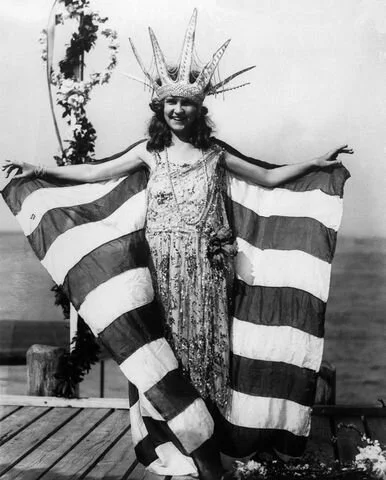
The very first Miss America, Margaret Gorman in 1921

The very first Miss America, Margaret Gorman in 1921

ENTER: THE MOVEMENT FOR TRANS INCLUSION

In an era when trans visibility has reached unprecedented heights, there remains the question of whether beauty pageants are indeed an appropriate venue for trans advancement. In entering mainstream beauty pageants, trans contestants like Anita Green face similar barriers: the heteronormative ideals celebrated by mainstream beauty pageants are sure to reward only those trans women who can “pass” enough to be palatable for a mass audience.

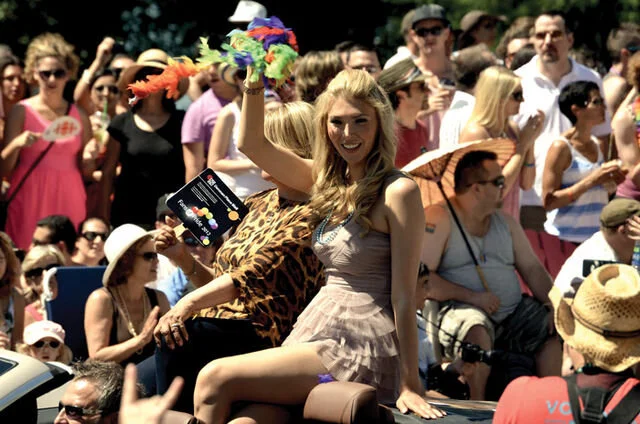
And even when a contestant can pass, that does not automatically free her from controversy. In 2012, Jenna Talackova, a trans beauty contestant in the Miss Universe Canada pageant, strode into the international spotlight when news broke of her disqualification from the contest based on a rule stating contestants must be “naturally born female.” She was later allowed to re-enter after the Gay and Lesbian Alliance Against Defamation (GLAAD)—in a move analogous to the NAACP’s 1968 action on behalf of black women—intervened, negotiating a rule change. She earned the title of Miss Congeniality and made it to the top 12 before being eliminated.

Jenna Talackova was disqualified from the Miss Universe Canada pageant in 2012 for being trans. She was later allowed to re-enter.

Jenna Talackova was disqualified from the Miss Universe Canada pageant in 2012 for being trans. She was later allowed to re-enter.

The following year, another trans woman, Kylan Arianna Wenzel, competed in the Miss California USA Pageant, garnering national and international attention before being eliminated. And four years and one Trump election later, Green became the third trans woman to participate in a mainstream beauty pageant.

She was aware that beauty pageants tended to reward heteronormative standards of beauty, but hoped to challenge this dynamic. “I know I don’t have the stereotypical beauty that most pageant contestants have,” she says. “I know that I have more masculine features. But that’s partially why I chose to compete. I wanted trans women to know that they are beautiful—whether or not they ‘pass.’”

It seems clear that beauty pageants will continue to reward women, regardless of birth gender assignment or racial background, who cleave to heteronormative, Eurocentric ideals of beauty. There is, however, some disagreement about whether this is a tolerable sacrifice to make in the struggle for greater trans representation.

EXPANDING REPRESENTATION IN BEAUTY PAGEANTS

Trying to gain access into the cis, white pageant world when you are not one or both of those things continues to be a thorny proposition. But there will always be those who believe that representation of any members of a disenfranchised group is consequential for all members of that group.

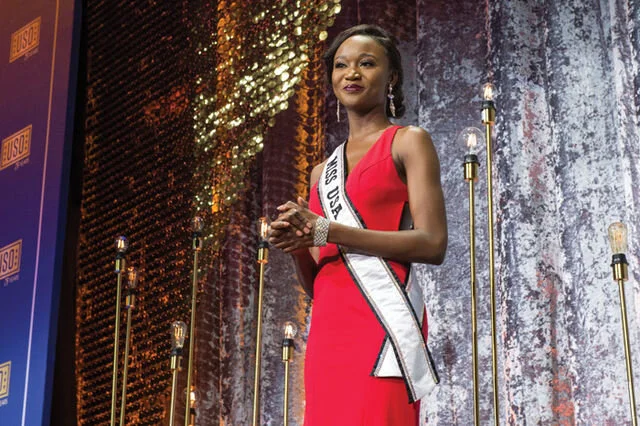
Perhaps, with an initial barrier broken, the way is paved for greater diversity in beauty pageants. For example, it is interesting to note that while the first black women who won Miss America and Miss USA crowns tended to be lighter-skinned—like the first black Miss America, Vanessa Williams, crowned in 1983—ensuing years saw the crowning of darker-skinned women like Deshauna Barber (the ninth black winner of Miss USA) and Marjorie Judith Vincent (the fourth black winner of Miss America).

Miss USA 2017, Deshauna Barber

Miss USA 2017, Deshauna Barber

Entry as a controversial or boundary-breaking contestant isn’t the only way women are using pageants as sites of protest. For instance, in 2017, during the Miss Perú pageant, contestants drew attention to the extreme levels of violence against women in their country by hijacking the portion of the evening in which they would usually repeat their body measurements to instead give statistics about femicide.

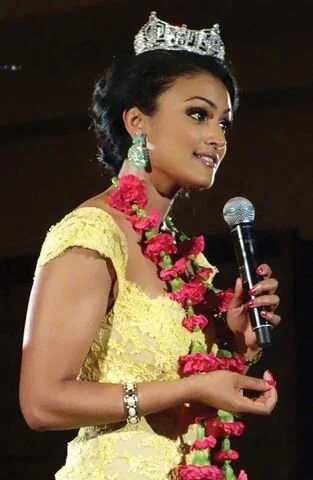
Regardless of one’s platform, it would be wise not to overlook the significance of beauty pageants in the cultural imagination. Gone are the days when Miss America was the most highly anticipated television event of the year, but the beauty pageant is still a surprisingly compelling symbol. Evidence of the importance many still place on Miss America as a representative of national identity and belonging can be found in the online outrage generated by the crowning of Nina Davuluri, a daughter of immigrants from India, in 2013. Online commenters raged about the crowning of a “foreigner” (though Davuluri is an American citizen) and referred to her, alternatively, as Miss 7/11 or Miss 9/11. The naming of a first-generation American as Miss America seemed to threaten many people’s internally held norms regarding race and national identity, and the backlash was intense.

Miss America 2014, Nina Davuluri, the first woman of Indian descent to win the pageant

Miss America 2014, Nina Davuluri, the first woman of Indian descent to win the pageant

It seems clear that this outrage points to the tremendous power of representation, which is able not only to reflect cultural understandings, but also to shape them. Would her victory have been a source of so much outrage if it hadn’t been indicative of the changing conception of what a beautiful, American woman looks like? Could a transgender Miss America or Miss USA, in the same way, help shape our cultural understanding?

SO, WHAT?

A recent study out of the University of Southern California found that trans representation in media is linked to greater empathy and more progressive political views among viewers. In an era when violence against trans women is mounting into a public health crisis, we should not be too quick to cast aside studies like these. Pageants, with their wide, national viewership, are prime spaces for this type of beneficial exposure.

Of course, winning beauty pageants cannot be the only route toward wider social acceptance. We must also seek advancements such as trans representation among elected officials—as we saw this recent Election Day when trans women Danica Roem and Andrea Jenkins won their bids for public office.

But who knows? Perhaps a pageant enthusiast who sees Anita Green, or a woman like her, crossing the stage in an elegant evening gown this year will think of her the next time a bathroom bill appears on a ballot at her local voting booth. Culture changes both quickly and slowly, and you never know what factors will combine to create a watershed moment.

-lm


How much do trans characters on TV impact cultural attitudes? A lot, actually.

This article was originally published in Metro Weekly
 

Jeffrey Tambor — Photo: Amazon Prime Video

Jeffrey Tambor — Photo: Amazon Prime Video

Researchers at the University of Southern California have discovered that the more we see transgender characters on television, the more positive our attitudes toward transgender people and related policies become. According to the study, becoming engrossed in a narrative enables viewers to identify with transgender characters’ struggles in a way that mimics a first-hand experience.

Researchers surveyed viewers of USA Network’s Royal Pains following a June 2015 episode that featured a teenage transgender character. Their findings, published in the peer-reviewed journal Sex Roles, showed that viewing the episode correlated to more positive attitudes toward transgender issues and policies.

The effect was also shown to build on itself: the more exposure to transgender television characters that viewers had — such as through Transparent or Orange is the New Black  — the more positive the viewers’ opinions of transgender people and policies became. Even just a single exposure still correlated to more pro-transgender attitudes.

However, high-profile news about transgender people does not have the same impact. Exposure to Caitlin Jenner’s transition, heavily covered in the media at the time of the study, apparently had no impact on participants’ views of transgender issues.

Since the USC study provides evidence that transgender characters lead to a more favorable attitude among viewers, researchers hope that it might also lead to such things as increased voting, activism, and political contributions to the trans cause.

Royal Pains had never before featured a transgender character or dealt with LGBTQ issues in general, a factor that researchers think helped boost its effectiveness in shifting attitudes. According to the study, transgender “single-episode characters” have the ability to reach people who would not tune into a show dealing exclusively or mostly with transgender issues.

“For show writers who are seeking to increase understanding around LGBT people and issues that they face, there is evidence that smaller storylines are effective,” says Traci Gillig, lead researcher on the project and doctoral candidate at the USC Annenberg School for Communication and Journalism. “A lot of focus is on the bigger shows, but sometimes smaller exposures are the most effective.”

The findings are significant for television writers seeking to make an impact on cultural attitudes through their storylines. And the stakes are high: In light of steadily high rates of violence toward transgender people, researchers call improving attitudes towards transgender people a public health priority.

Could AI abolish car accidents? Mayor Bowser is betting on it

This article was originally published to Technical.ly


pexels-photo-373974.jpg

Imagine for a moment that, every week, four to five commercial airplanes crashed in America.

In reality, a similar number of people die per week in traffic accidents, but, for the most part, those deaths don’t resonate with us in the same way. 

“If that many airplanes were crashing every week, it would not be acceptable to people. Unfortunately, we’ve come to view traffic death as the ‘cost of doing business,” said Franz Loewenherz, principal transportation planner for the city of Bellevue in Washington state. “But it doesn’t have to be.” 

Under his leadership, Bellevue has partnered with Microsoft to come up with a software solution that could reduce or eliminate traffic deaths. The software, developed under Microsoft Distinguished Scientist Dr. Victor Bahl, will eventually recognize locations where crashes are most likely to occur. 

“This is an entirely different way of looking at safety,” Dr. Steven Lavrenz, technical programs specialist with the Institute of Transportation Engineers said. “We’re detecting events before they occur in order to ensure that they never do.”

pexels-photo.jpg


How does it work?

In short, the software algorithm analyzes a city’s traffic footage and uses artificial intelligence to recognize traffic events known as near-misses. (Think: a car screeching to a halt to avoid hitting a pedestrian.) This strategy, known as surrogate safety analysis, uses near-misses as “surrogate events” in order to detect risk before actual crashes take place. 


As patterns emerge, city transportation officials will gain the ability to identify where the highest risks for traffic accidents are around the city. Eventually, the goal is to build a database that city officials will be able to use to spot the riskiest areas on the streets.

But the software is not yet fully developed — it still has trouble differentiating between pedestrians and bicyclists. And the challenge is that the software cannot teach itself; it requires a human being to label an object multiple times before it can begin to recognize it on its own.

So, to bring this project across the finish line, developers are calling on the public to help by watching traffic footage and labeling people and bikes. 

pexels-photo-159888.jpg


That’s where D.C. comes in.

Last week, Mayor Muriel Bowser announced that D.C. would be participating in this effort as part of the Vision Zero initiative, a campaign to end traffic fatalities in the District by 2024.

What exactly has Mayor Bowser signed us up for? Now that we are signed on, Microsoft will be granted access to the 130 closed-circuit traffic cameras that perch above our streetscape here in the District. Video footage of traffic will be fed into the software, and people from all over the United States will help by labeling objects for the machine to learn. 

Eventually, D.C. city officials will have access to a wealth of information about high risk areas on our streets and be able to respond accordingly. While many of these solutions won’t be clear until the problems are identified, corrective actions could include adjusting traffic signal timing, reducing crossing distances for pedestrians, implementing roundabouts or conducting public education campaigns.

pexels-photo-434459.jpg


Artificial intelligence: driving the future

All of this represents the tip of an iceberg, with artificial intelligence set to play an increasing role in the way we transport ourselves in coming years. A great example of this, of course, is the autonomous car — but think beyond that. Here are four ways AI could help:

  • Improve your driving. Dr. Victor Bahl says that as autonomous cars gain sophistication, they will be able to communicate with surrounding infrastructure to keep us safer. Take for example a recent demo in Hannover, Germany in which an autonomous car was able to brake safely for a pedestrian obscured from its view. How? By communicating with a traffic camera that had a clear view.  
  • Save you time. Artificial intelligence will also help motorists save time. An example of this includes Xerox Research Center Europe’s plans to develop software that recognizes available parking spaces on city streets via cameras attached to buses. Another is the Robotics Institute at Carnegie Mellon project in Pittsburgh to develop “smart” traffic lights that use artificial intelligence to communicate with one another, adapting to changing traffic conditions in order to increase efficiency at intersections. They’ve been shown to reduce travel time by 25 percent and idling time by over 40 percent.
  • Improve public safety. Dr. Bahl points out that an intelligent, connected camera system could even aid in Amber Alert cases by sorting through traffic footage in real time to identify car color, make, and model and license plate numbers.
  • Help navigate. It’s feasible that this technology could compete with Waze and Google Maps by using smart, connected cameras to issue real-time traffic alerts to help ease congestion. (And, Dr. Bahl points out, the less time spent on the road, the fewer opportunities for accidents.)

Where do we go from here?

Before the software can go mainstream, privacy concerns will need to be sorted out. According to Loewenherz, a number of cities interested in implementing this technology have had to put it on the backburner while working out issues with their existing video privacy policies. 

But it is likely that, as the software develops and yields compelling results, more cities will be eager to sign on.


Can those food delivery bots travel the District’s streets safely?

D.C. is moving forward with bot delivery — cautiously.

This article was originally published to Technically.

It’s a dilemma for the ages, isn’t it? The challenge of transporting people and things from point A to point B seems likely to be with us for as long as space and time — and faraway loved ones and online shoe shopping — exist.

The newest innovation in response to this problem is autonomous transportation technology. (Think: self-driving cars , currently on their way to becoming mainstream.) Autonomous transportation technology boasts many possible positive implications, but as with progress in general  —  and technology advancements in particular — they also present brand new problems to be solved.

D.C. Councilmember Mary Cheh, chair of the Committee on Transportation and Energy, is well aware of this. She has been instrumental in pushing forward autonomous transportation technology in the District  —  most recently with the Personal Delivery Device Act of 2016, legislation that legalized a pilot program for autonomous delivery bots capable of making deliveries with no human assistance.

While she’s hopeful regarding the implications of this new technology, she is careful to note that there are still questions that must be answered before wide-scale roll out of the technology can occur.

New technology, new problems

Potential vandalism or theft present a clear challenge, but Starship Technologies, the Estonian company that manufactures the bots, is confident that the bots include sufficient security measures, like alarms and cameras, to deter most would-be thieves and vandalizers. But Cheh won’t be convinced entirely until a couple of other questions are answered.

The councilmember says she’s waiting for this month’s pilot program to confirm whether the bots, successful elsewhere, have the technical capacity to safely navigate the District’s streets. There is reason to be optimistic, since the same model of bots is now operating in Europe, having safely covered 14,500 miles and counting.

Still, the bots are new to the city, and Cheh would like to see them successfully navigating these particular streets and sidewalks before she’s ready for the bot program to move from the pilot stage to full-scale implementation.

But more complicated challenges exist  —  and ones with more potentially destructive effects. An obvious and significant concern is the potential for misuse of bots to transport dangerous materials to target government buildings or embassies. In a post-9/11 world, where the threat of terrorism ranks high on global security concerns, this question holds particular salience.

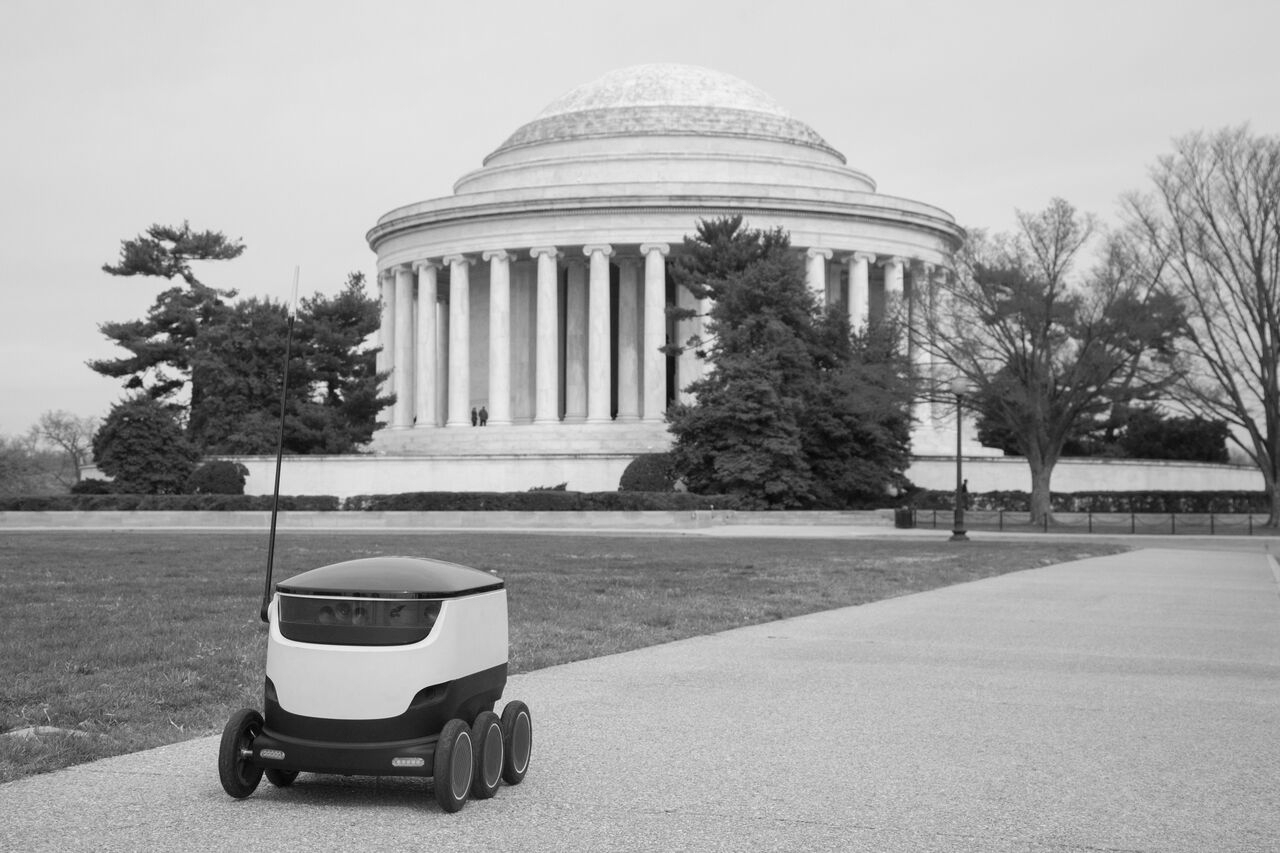
Importantly, baked into the Personal Delivery Device Act of 2016 are restrictions on movement of the bots, especially applicable in the high-profile city of Washington, D.C. For example, the bots are not permitted to travel near sensitive areas, such as the White House or Capitol Building. But questions arise around viability of these restrictions in the face of sophisticated hacking threats. For Cheh, the issue of weaponization of the bots is question that must still be answered. She says that she “hopes to gain clarity on the topic” in an upcoming hearing.

So, is it worth it?

If these hurdles can be overcome, there are compelling environmental and social reasons to support the proliferation of this technology in the District and beyond. Cheh is quick to point out the environmental benefits available through the use of these zero-carbon delivery bots. She also notes that seniors with limited mobility, as well as individuals living in food deserts could stand to gain from easy, affordable food delivery. But whether or not these benefits will be reaped remains to be seen — and will depend on the city’s ability to solve tough problems.

In 2017, your delivery person could be a robot

Bot in action 1.jpg

This article was originally published to Technically.

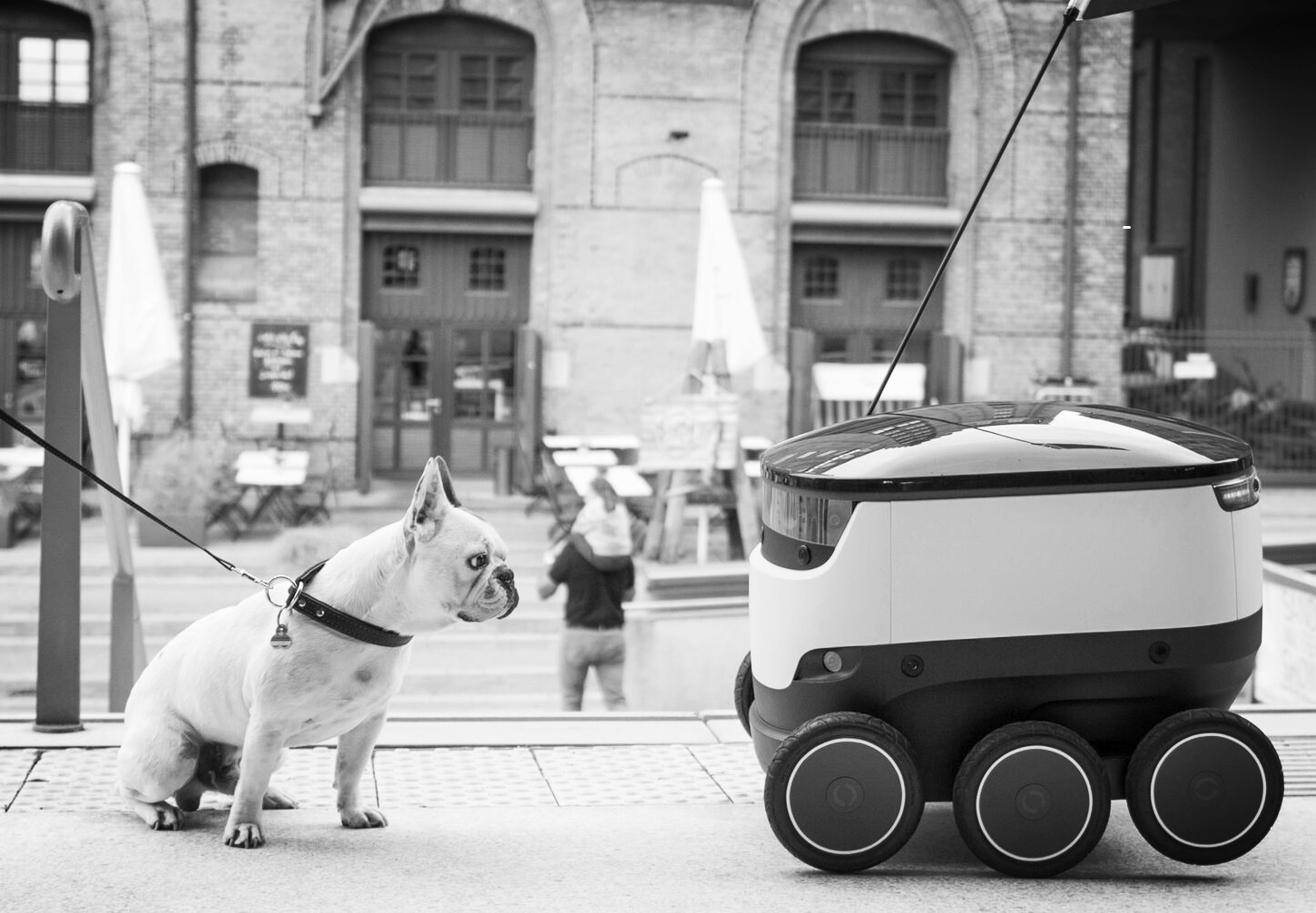
Imagine: it’s a weekday morning in Columbia Heights and you’re trudging to the Green Line. On the sidewalk, there it is: an R2-D2 look alike, rumbling past on six rugged-looking wheels. It is tan-colored and about knee-height with a black lid. It navigates around obstacles like fire hydrants and pedestrians, is able to stop suddenly and uses the crosswalk on its own.

Science fiction? No, just another day in the nation’s capital. By the end of this month, autonomous food delivery bots will be operating on the streets of Washington, which has been selected by an Estonia-based startup to host the first U.S.-based delivery bot pilot program. The startup supplying the robots is Starship Technologies, formed in 2014 by Janus Friis and Ahti Heinla, two Skype cofounders.

The company chose D.C. because of its time zone proximity to Europe and its less-congested streets compared with other nearby options, said Starship spokesman Henry Harris-Burland. The company has a singular aim: to revolutionize the local delivery sector, bringing the cost of delivery to $1 or less.

How does it work?

Each robot is capable of carrying two grocery bags (or about 40 pounds) and can travel within a three-mile radius. It navigates by using nine cameras and a GPS to construct a 360-degree, 3D map of its surroundings. Starship says it can complete a delivery within five to thirty minutes and can do it at a price 10 to 15 times lower than other local delivery transport options. Although the bots are autonomous, operating on their own 99 percent of the time, there is always a remotely located operator on duty who can take over navigation or speak to passersby if any of the bots encounter issues.

Customers place their orders via an app, which they also use to track the progress and estimated arrival time of the bot. When an order is placed, the bot deploys from the hub it is stored at, heads to the restaurant from which the order was placed and carries the items to the customer. When the bot arrives, the customer uses a secret code from the app to unlock the lid.

Bots could put D.C. on the cutting edge of local delivery

The Starship bot technology comes in response to an emerging dilemma for many companies: figuring out how to reduce costs of home delivery in the age of online shopping. In the delivery sector it even has a name: the “last mile problem,” and it has prompted Amazon to experiment with aerial drone technology and “locker” pickup locations in cities.

The “last mile” is not necessarily one mile, but rather the final leg of a product’s delivery to the consumer  —  after it has reached a hub or port and must be distributed to various locations. It is the most expensive leg of the journey, comprising about 28 percent of the total cost of transport  —  and the most CO2-producing leg to boot.


What’s the catch?

An obvious issue is the possibility of vandalism or theft, a challenge that Harris-Burland, Starship’s manager of communications, says the company anticipates. Predicting that passersby will try to “ride them, steal them and tip them over,” the company has equipped each robot with an alarm, camera system and speaker to allow operators to warn would-be vandalizers that they are being recorded and that the police have been notified.

And another confidence-inspiring fact about the bots: so far, they have encountered 2.8 million people and covered 14,500 miles  —  all with no reported incidences of vandalism or theft. In fact, hundreds of trips are completed each day by the bots in England, Germany and Switzerland.

Still, the bots have yet to be tested in America, where last year a bot created by Canadian researchers as part of a social experiment was found destroyed in Philadelphia after having traveled for a full month without harm through Canada and parts of Europe. This has left some to wonder if the U.S. is a less hospitable environment for bots.

What’s the upshot?

If the program is successful in the U.S., Starship’s land bot program could add a valuable delivery solution to the mix here in the States  —  allowing the nation’s capital to help define the evolving landscape of local delivery.

-lm